The giant who kept no heart about him
Who is in the tale?
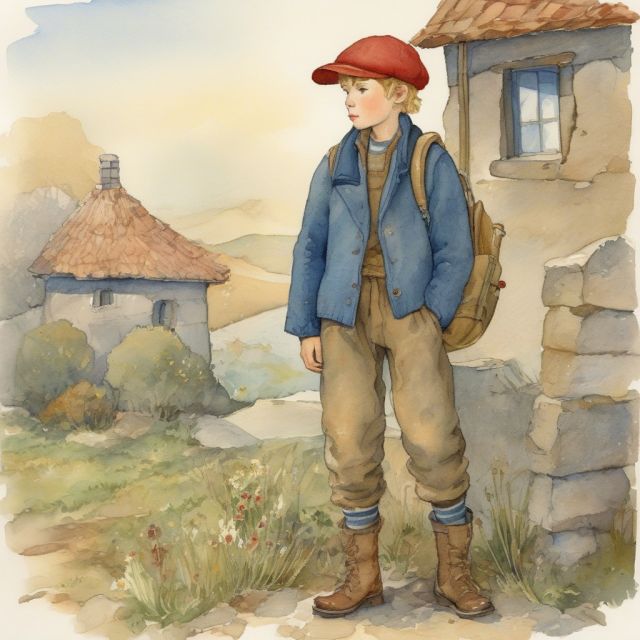 AskeladdenThe youngest brother who is kind to animals and rescues his brothers
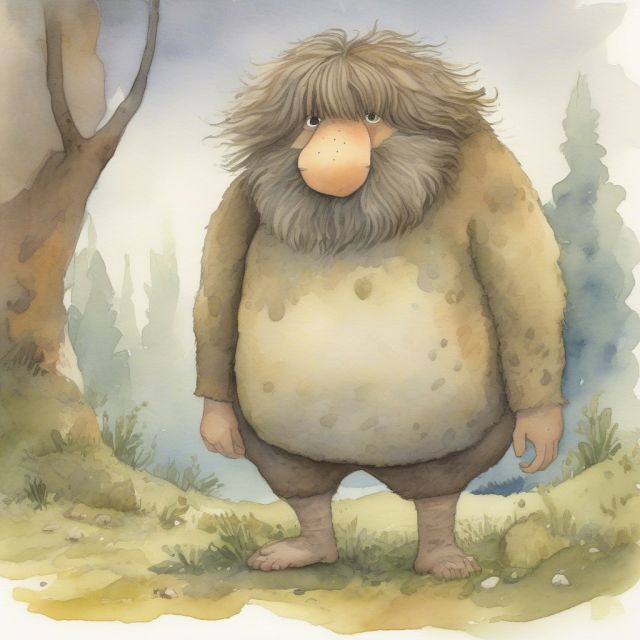 RisenThe big giant who turned the brothers to stone
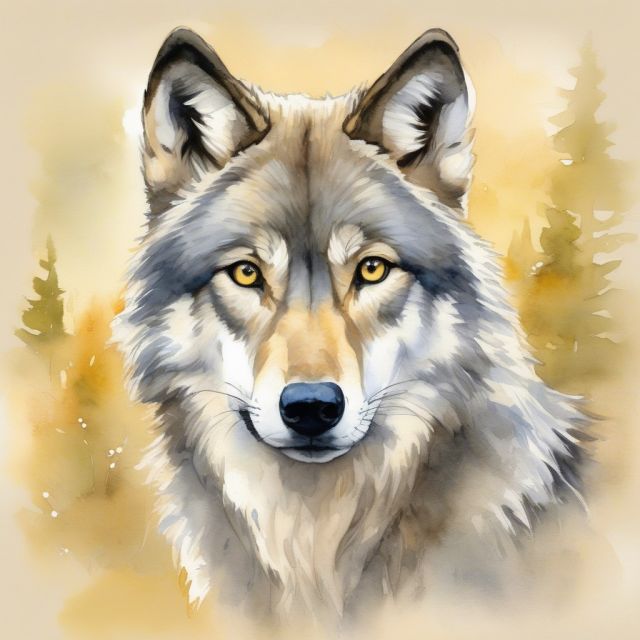 UlvenThe hungry wolf who becomes Askeladden's friend and carries him
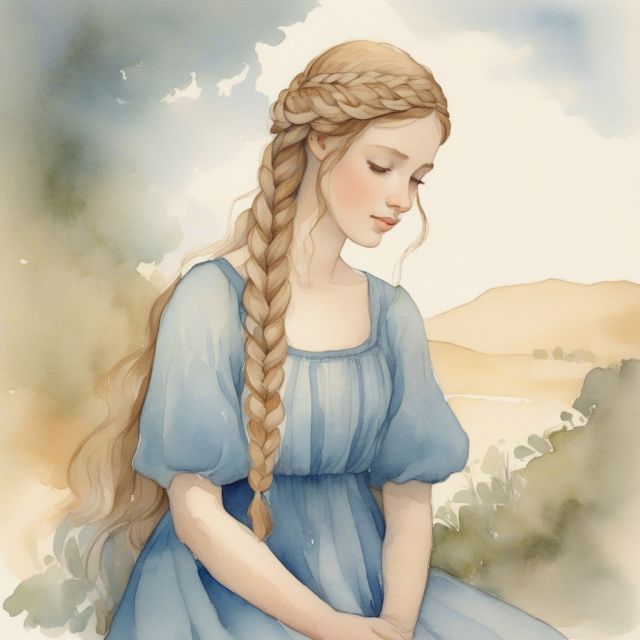 PrinsessenThe princess held captive by the giant who helps Askeladden
The brothers who never came home
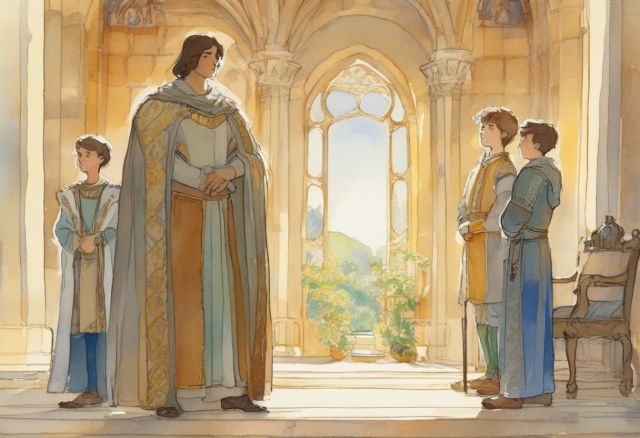
Once upon a time there was a man who had seven sons, and he was so poor that he could hardly fill the pot of an evening. The six eldest were big and strong, and they wanted to go out into the world to earn some money. Per, the eldest, thumped his chest and said he would come home with a chest full of gold. Pål was thin and quick with his tongue. He reckoned it surely wouldn't take long, for "once you're on your way, all you have to do is take hold of your luck".
The Ash Lad, the youngest, wasn't allowed to go. "You're far too small," said Per, and he ruffled his hair. "Stay at home and look after your things." For the Ash Lad had a bag full of odd treasures he had found along the roads: a crooked horseshoe, a spoon with no handle and a round stone with a hole in it. He thought they were every bit as fine as gold, and he didn't argue. He simply waved after his brothers until they were gone at the edge of the forest.
A whole year went by, and not one of the six came home. No letter came, and nobody had heard a word about them. His mother dried her eyes on her apron, and his father sat for a long time staring into the fire. At last the Ash Lad got up and took his bag. "Now I'm going to look for them," he said. His father shook his head, but he found a loaf of bread and a big smoked sausage and put them in the Ash Lad's knapsack. He had nothing more to give.
The raven, the salmon and the wolf
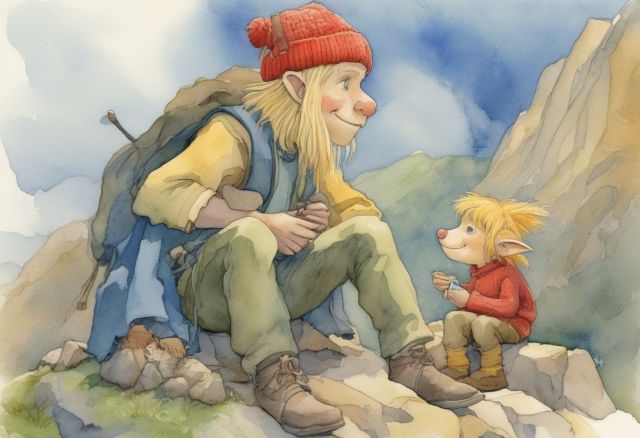
The Ash Lad walked and walked, over marshes and along streams. On the second day he found a raven lying by the roadside, cheeping faintly. It was so thin that its feathers stuck out in every direction. The Ash Lad sat down and broke off a piece of the loaf. "Here you are," he said. "It's not much, but it's still warm from the knapsack." The raven ate, looked at him with a bright eye and croaked, "I shall remember this, lad."
A little further on, a big salmon lay in a puddle that was drying up. It flapped its tail weakly and gasped for water. The Ash Lad lifted it up in his arms. It was heavy and slippery as a seal, and he had to run, for he didn't want to be too late. Then he rolled it out into the river. The salmon lay still for a moment, gazing up at him. "You have saved my life," it burbled. "I shall never forget it."
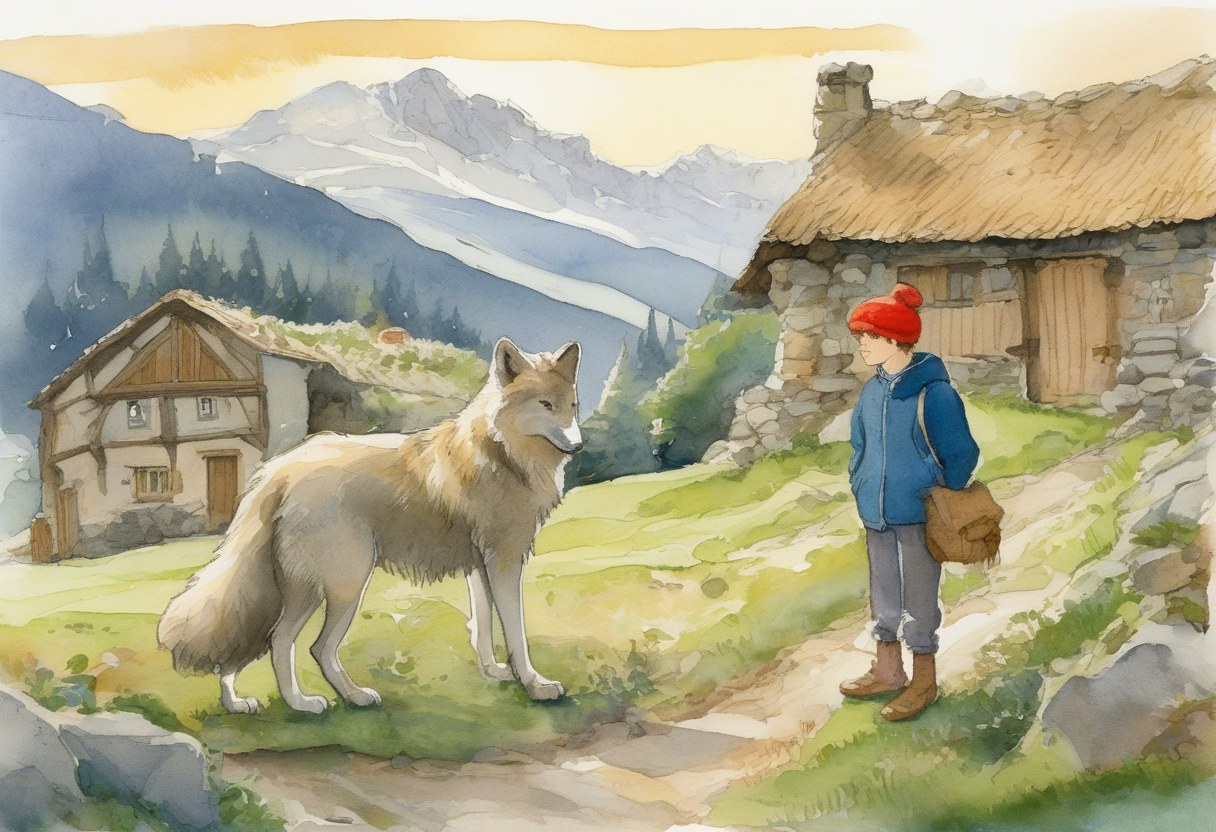
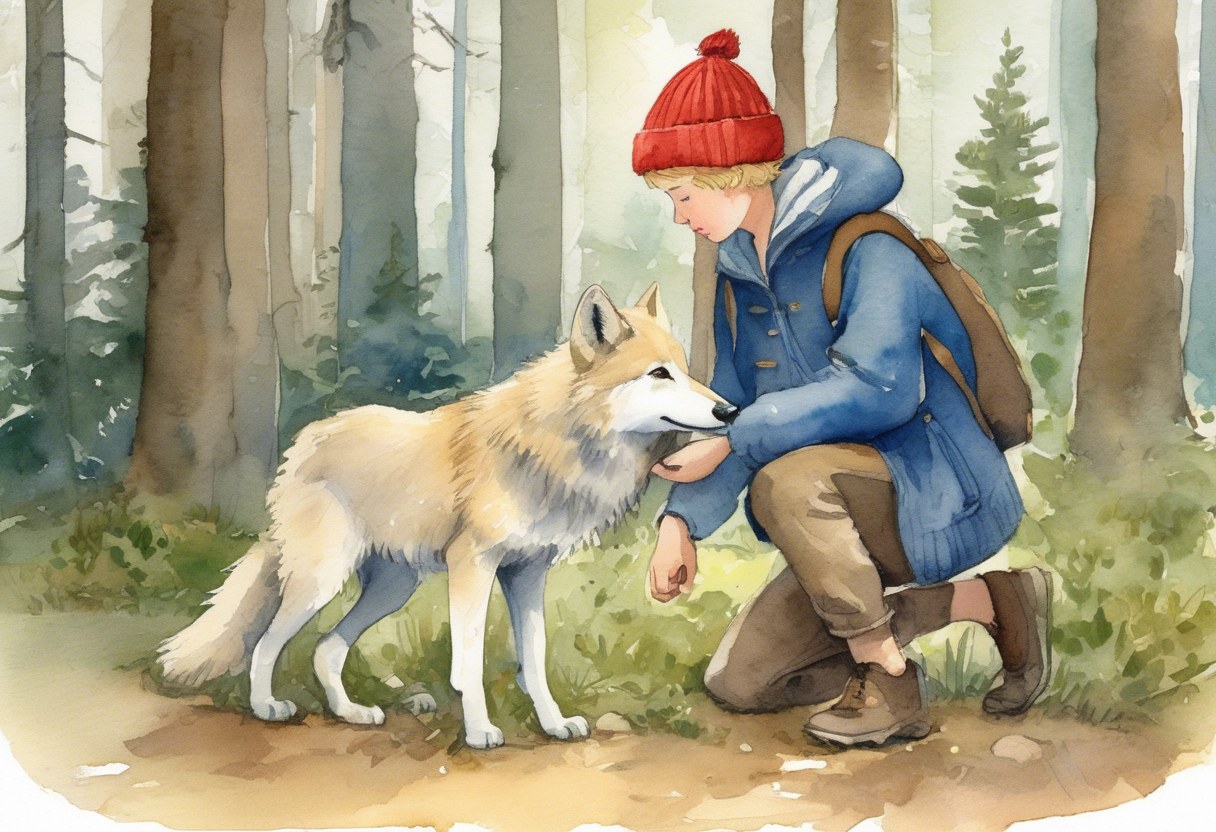
On the third day a wolf came out of the spruce forest. It was so thin that its ribs stuck out under its fur, and it looked straight at the sausage in his knapsack. Now the Ash Lad stood still and thought it over. He had walked a long way, and he was hungry as a bear himself. The sausage was all he had left, and he didn't know how much further he had to go. But the wolf looked as if it hadn't the strength to take another step. "Take it," said the Ash Lad, and he laid the sausage on the ground. "I'll manage well enough on berries." The wolf gulped it down in three big bites and licked its lips. "You shall have it back, lad," it said.
Before they parted, each of them gave him a gift. The raven picked out a black feather, the salmon left a silver scale on a stone, and the wolf tore a grey tuft from its fur. "Hold it up and call for me, and I will come," they said, almost together. The Ash Lad put the gifts in his bag, and now he had three new treasures for his collection.
The farm under the mountain
Towards evening on the third day he came to a mountain, and on the mountainside lay a farm so big that the door handle sat above his head. All around the farm stood many still figures, grey as the rock and covered in lichen and moss. The Ash Lad went closer, and he felt his heart pounding. There were six young men made of stone, and six girls in fine dresses. One of the young men had his fist raised, as if he were about to boast, and another stood with his mouth open, in the middle of a long sentence. "Per!" cried the Ash Lad. "Pål!" But they didn't answer.
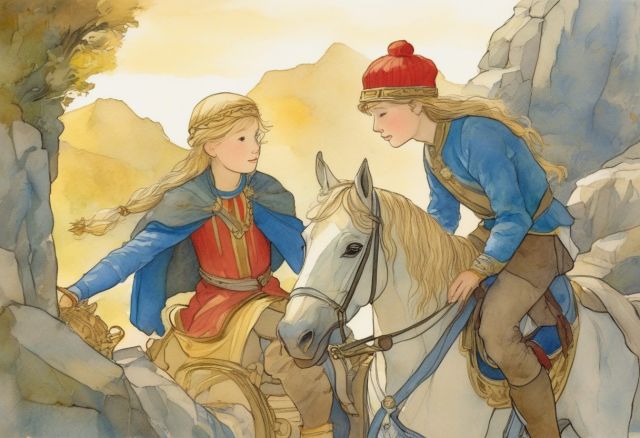
Then the door opened a crack, and out peeped a young woman with a long fair plait and sorrowful eyes. She was a king's daughter, she whispered, and she had been trapped here for a long time. "Hurry away!" she said. "The giant who lives here has turned all these people to stone. If he comes home and finds you, the same will happen to you." But the Ash Lad shook his head. "I'm not leaving without my brothers," he said. Then she looked at him for a long while, and at last she opened the door wide and hid him under the bed.
The ground thudded when the giant came home. He was big as a barn and grey as an old boulder. He had a nose like a potato sack and hair like a bird's nest full of heather. He stopped in the middle of the room and sniffed. "I smell a human!" he boomed. "No, it's a raven," said the king's daughter calmly. "It came with a bone and dropped it down the chimney. I threw it out again, but the smell has stayed." The giant grunted and let it be. He sat down at the table and swallowed a pot of porridge as big as a washtub, and the Ash Lad lay so still that he almost forgot to breathe.
The heart that wasn't at home
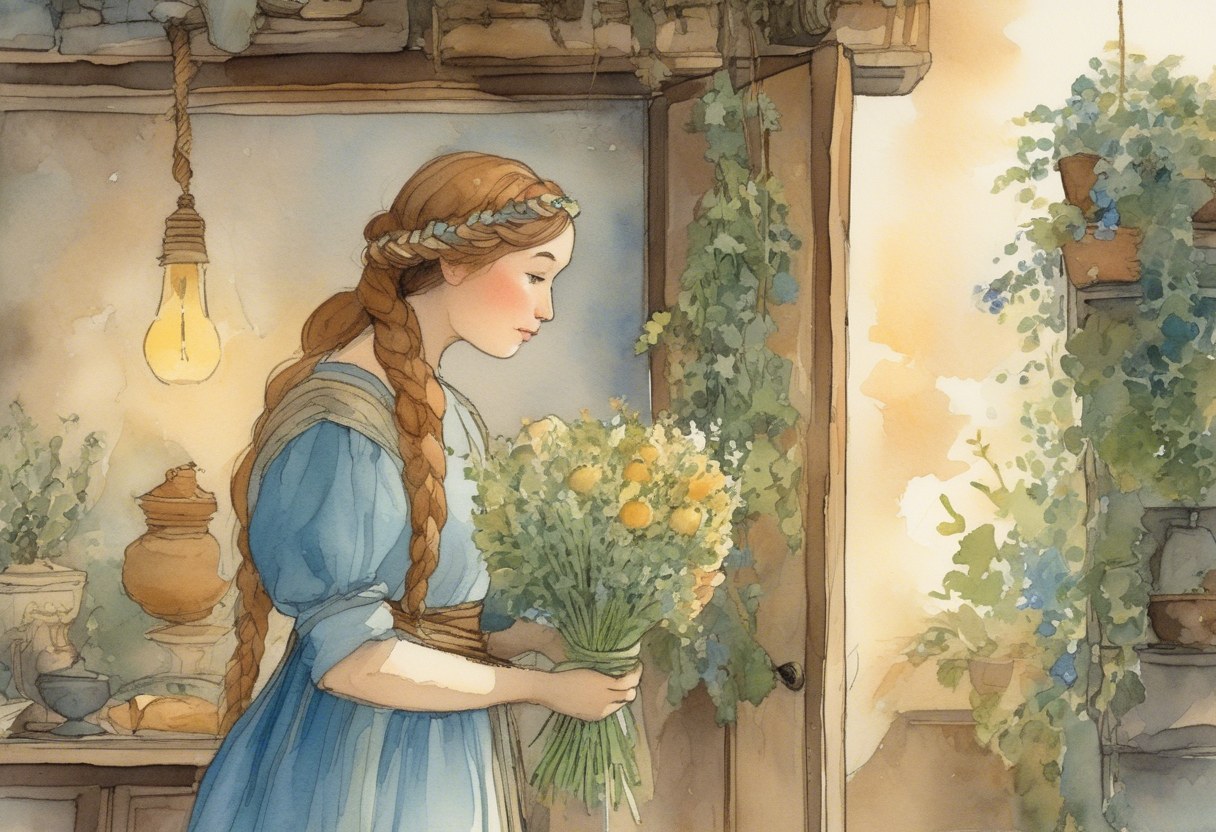
The next day, when the giant had gone out, the Ash Lad crept out, and together they made a plan. That evening the king's daughter sat down beside the giant and smiled. "You are so strong and so big," she said. "But where do you keep your heart, when you never have it about you?" The giant laughed so that the ceiling rattled. "It lies under the doorstep," he said. "Nobody ever goes there."
The next morning they searched under the doorstep, but there was nothing there except earth and an old shoe sole. The king's daughter gathered a big armful of flowers and decorated the doorstep with them. When the giant came home, he stopped and looked at the flowers. "What have you done?" "I wanted to make things pretty for your heart," she said, "since you are so kind to me." The giant's face went very strange. Then he cleared his throat. "It isn't there. It's in the cupboard."
The next day it was the same again. They searched the cupboard and found only old horn spoons and a rusty kettle. The king's daughter wove wreaths of heather and birch twigs and hung them on the cupboard door. When the giant came home and saw them, he stood still. Then he sat down heavily and said in a low voice, "You are the first who has ever decorated anything for me. I will tell you the truth." And he told it, word for word, while the Ash Lad lay under the bed and listened.
"Far away there lies an island," said the giant, "and on the island stands a church. In the church there is a well, and in the well swims a duck. In the duck there is an egg, and in the egg lies my heart." Then he curled up in a corner and slept, and his snoring made all the cups rattle. Early the next morning, before the giant woke, the Ash Lad slipped out. The king's daughter gave him a piece of bread and squeezed his hand hard. "Good luck," she said. "Come back!"
The egg in the well
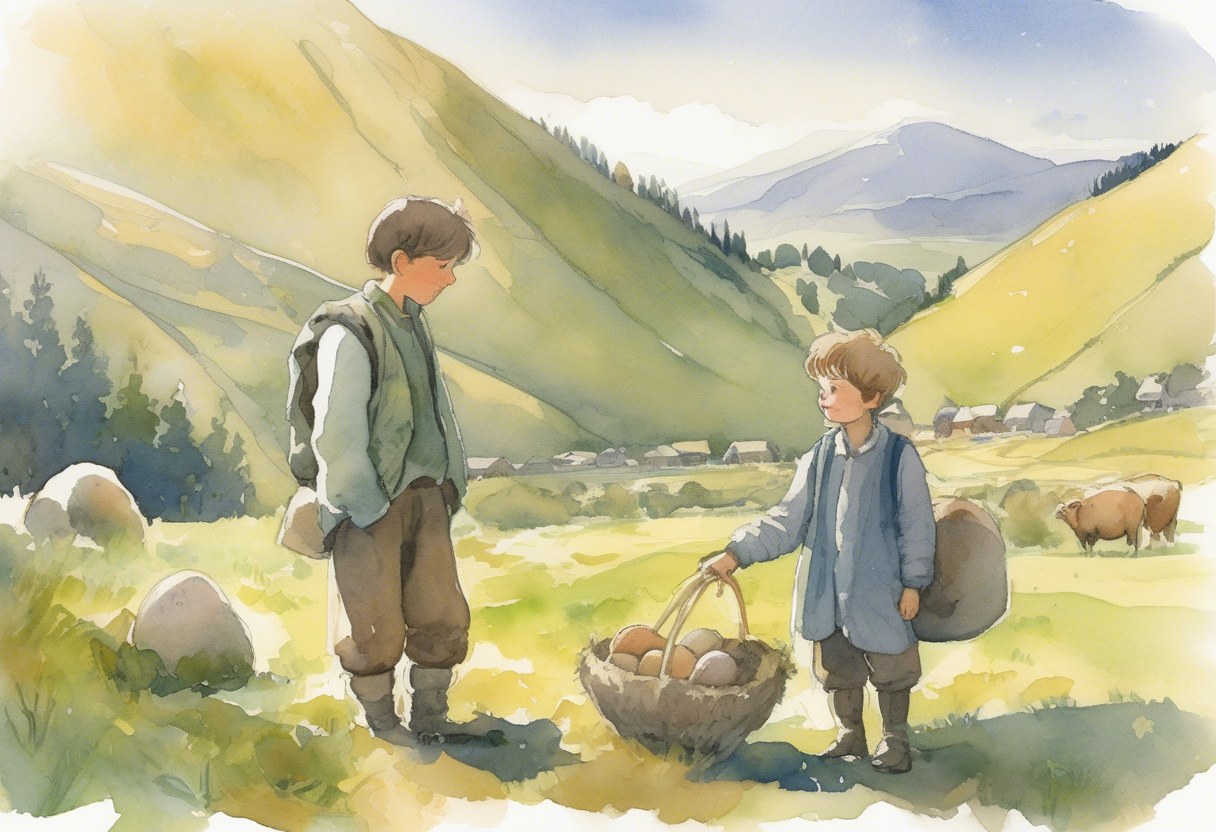
Out on the open ground the Ash Lad held the grey tuft of wolf's fur up to the wind and called for the wolf. It wasn't long before something rustled in the forest, and there it came, big and strong, with a shining coat. "Sit on my back," said the wolf. Then off they went, over hills and marshes and rivers, and at last straight out into the sea. The wolf swam, and beside them something flashed silver. It was the salmon, following them all the way. Only when the sun stood high did they come ashore on a small, windswept island.
There stood the church, grey and silent. The door was locked, and the key hung high up in the tower, far out of reach. The Ash Lad held up the black feather and called for the raven. At once he heard wingbeats, and the raven came swooping down from the sky. It flew up into the tower, took the key in its beak and dropped it into his hands. The door creaked open, and in the middle of the church he found the well. There the duck swam round and round, flustered and proud.
The Ash Lad bent down and caught the duck gently, but just then the egg fell out and plopped into the depths. "Oh no!" he cried. But a moment later something flashed silver in the water. The salmon came up, holding the egg carefully in its mouth. The Ash Lad took it with trembling hands and thanked all three of them. Then he climbed onto the wolf again and rode back, with the egg held safe in both his hands.
Back at the farm the giant sat slumped in the room, grey in the face and weak as a candle stub. When he saw the egg, he gasped for breath. "Give it to me!" he begged. "First you must bring back to life everyone who has been turned to stone," said the Ash Lad. The giant got up groaning, went out into the yard and breathed on each of the stones. Lichen and moss trickled away, and then they began to stir. Per clenched his fists and said, "What happened?" Pål opened his mouth and carried on with the sentence he had been standing in the middle of for a whole year: "...so I said so all along!" And the king's daughters drew breath and stretched.
But then the giant reached for the egg with both his big hands. The Ash Lad held it tight, and then he squeezed hard. The giant went stiff and still, and then he grew and turned grey, until at last he was a great mountain with heather on top. There he lies to this very day. The youngest king's daughter went home with the Ash Lad, and each of the other six king's daughters got one of his brothers. They held a wedding that was talked about in seven parishes. Per and Pål never said a word about the Ash Lad being too small, not that day and not ever after.
Snip, snap, snout, this tale's told out.
Freely retold after Asbjørnsen & Moe: Norske Folkeeventyr (1840-årene).
This tale was written with the help of artificial intelligence (Gemini) and illustrated with Stable Diffusion XL. Every tale is checked for child-friendly content before it appears here.