The maiden on the glass mountain
Who is in the tale?
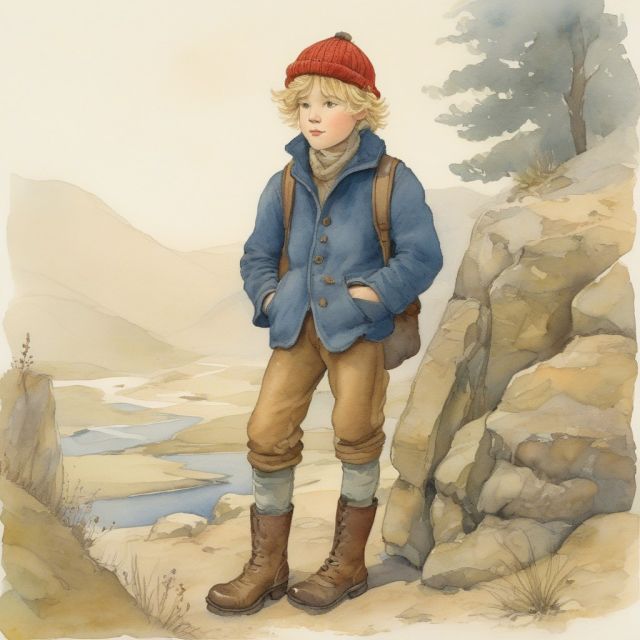 AskeladdenThe youngest brother who wins the princess
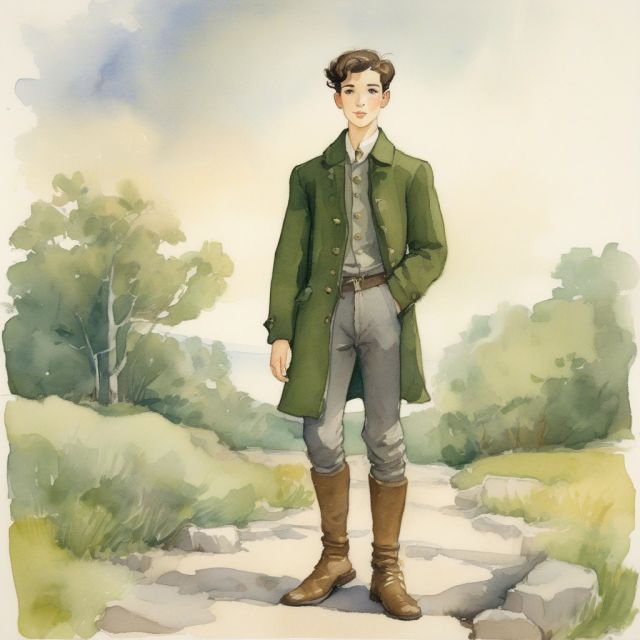 PerThe eldest brother who boasts and runs away
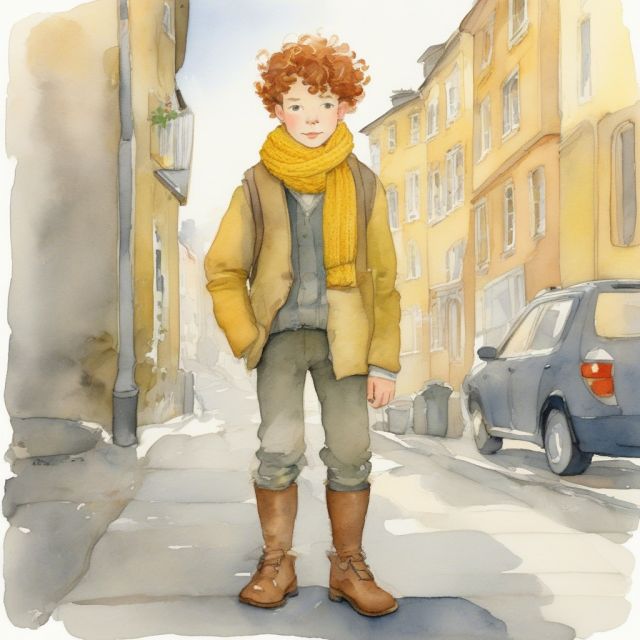 PålThe middle brother who gives up quickly
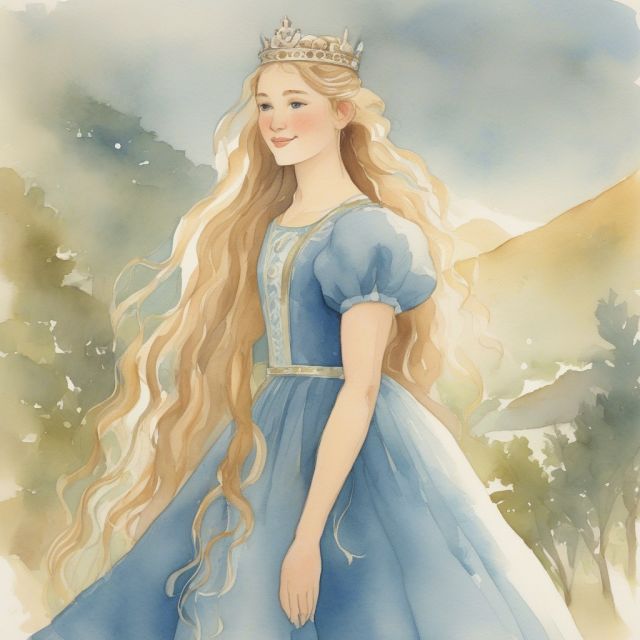 KongsdatterenThe princess on the glass mountain
The hay that vanished
Once upon a time there was a man who had a farm close to the king's castle. On the farm he had a big meadow, and in the middle of the meadow stood a roomy barn full of hay. But every Midsummer's Eve something strange happened. When the farmer got up the next morning, all the grass was gone, as if a hundred cows had enjoyed a feast during the night. The same happened the year after, and the year after that.
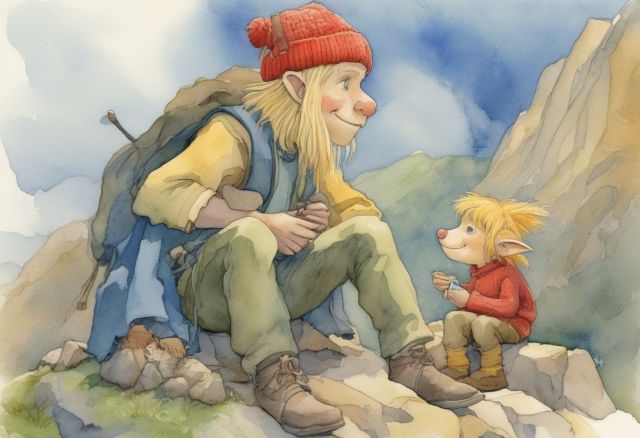
The man had three sons. The eldest was called Per, and he was big and strong and talked loudly about nearly everything. The middle one was called Pål, thin and quick with his tongue, but not very patient. The youngest was called the Ash Lad. He was small and skinny, always had ashes on his trousers, and kept his pockets full of things he had found along the road: buttons, stones with holes in them, and once a biscuit that a magpie had stolen and then dropped. Nobody thought much of him.
"That's enough," said the farmer one spring. "I can't bear to see the meadow shorn bare one more time. Someone must keep watch in the barn on Midsummer's Eve and find out what is really going on."
Per stretched his back and laughed. "I'll do it. Anyone who comes in there will get a taste of my fists." So when evening came he went into the barn and lay down in the hay with his eyes wide open. But as midnight drew near, the whole barn began to shake. The walls creaked, the beams sang, and it felt as if the whole earth were trembling beneath him. Per shot out of the door like a hare, and he didn't stop until he was under the blanket at home. The next morning the hay was gone, just as before.
The following year it was Pål's turn. "I'm much quicker than Per," he said. "I'll soon find out what it is." But he, too, felt the ground shake and the barn rattle all around him. Pål got out even faster than his brother, and by morning the meadow lay bare again. There was no hay to boast about.
Three horses in the night
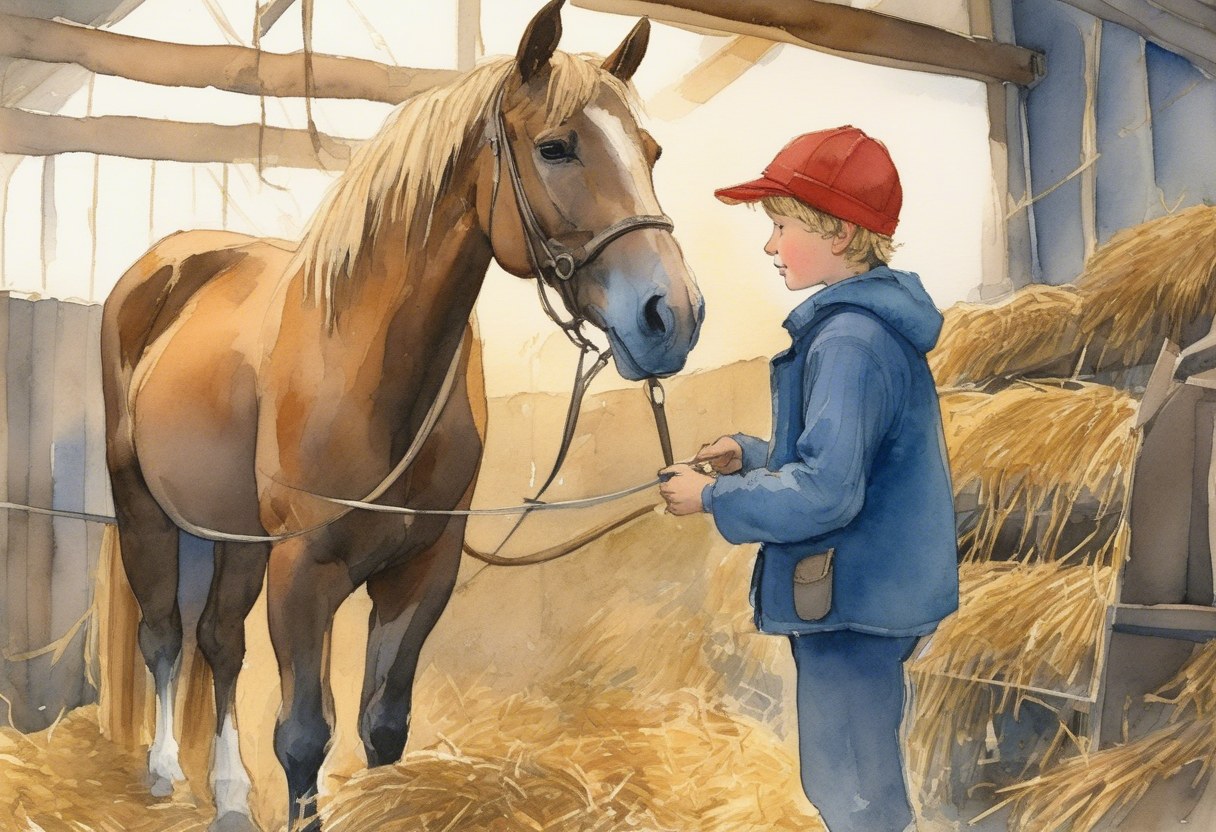
The third year, the Ash Lad got ready. His brothers laughed until they cried. "You? You, who don't even dare go to the cowshed alone in the dark?" said Per. "You just sit in your ashes, and there'll never be any hay again." But the Ash Lad only answered kindly that he might as well try. He could lose nothing more than a night's sleep.
On his way to the barn he found an old, rusty horseshoe at the side of the road. It was bent and crooked, but he thought it far too nice to be left lying there. He tucked it into his pocket, along with a reel of thread and a smooth green stone. "You never know what might come in useful," he murmured.
Inside the barn he settled down in the hay and listened to the stillness of the night. Then, just before midnight, a rumbling and shaking began. The barn creaked, the roof trembled, and dust fell like snow from the rafters. The Ash Lad held on to a beam and said quietly to himself, "This must be what frightened them. But it can't hurt me any more than a ripple hurts a bucket of water."
Then all went still again. And in the middle of the barn floor stood a horse, so big and splendid that the Ash Lad forgot to breathe. It wore armour of shining copper, and every ring and every plate glowed like a sunset. The horse stood eating the hay, calm as a cat in front of the stove. The Ash Lad walked carefully over, stretched out his hand and stroked its nose. "There now, you're no thief, only hungry," he said. "Eat as much as you like, but let me look after you." The horse snorted and stood quite still.
A little later the ground shook again, and another horse stepped in. It was even bigger, with armour of gleaming silver. And when the shaking came a third time, in walked the biggest of all, with armour of pure gold, so dazzling that the barn filled with light. The Ash Lad laughed aloud for joy. He spoke gently to all three, promised them shelter and food, and laid the suits of armour neatly beside him. Then he led the horses into a hidden cave in the mountain behind the farm, where no one ever went. And when day began to dawn, he crept home and climbed back into his ashes, as if nothing had happened.
The mountain of glass
Now you shall hear what happened at the castle. The king had a daughter, and she was so beautiful and so clever that people came from far and wide just to catch a glimpse of her. But the king was worried, for she was growing up, and he wanted to marry her to someone who truly deserved her. So he had a tall, slippery hill built entirely of glass. No one had ever seen the like. At the very top he seated the princess, and in her lap he placed three golden apples.
"Whoever rides up the glass mountain and takes the three apples," the king's men proclaimed throughout the land, "shall have the princess for his wife and half the kingdom as her dowry."
You can imagine that knights, princes and grand folk came from every corner of the land. The horses slipped and fell, and the riders went red in the face with shame. There was nothing to do but give up and go home. Per and Pål had heard the news too. "Now the two of us will have a go!" said Per, thumping his chest. They each groomed a horse and set off.
The Ash Lad came out of the ashes with a face full of soot. "May I come along and watch?" he asked. "I won't do anything wrong, I promise."
"You?" said Pål with a snort. "People would laugh themselves silly if they saw you there. Stay at home and stroke the cat." And off they rode, leaving him standing in the farmyard. The Ash Lad only shrugged. He had other plans.
The knight nobody knew
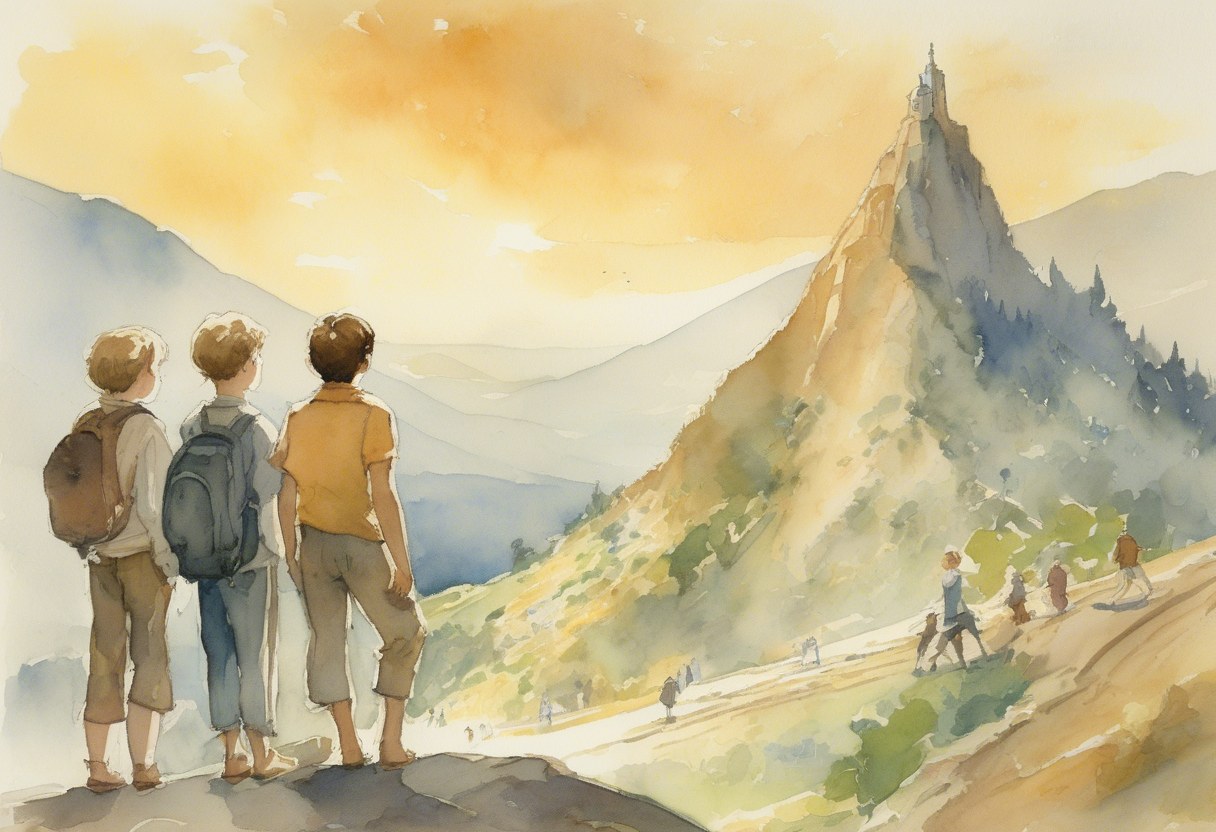
When his brothers were out of sight, the Ash Lad ran to the cave in the mountain. There stood the copper horse, waiting. He put on the copper armour, which fitted as if it had been made for him, and swung himself up into the saddle. Then he rode off towards the glass mountain, and the horse ran lightly and surely, as if the road were as flat as a pewter plate.
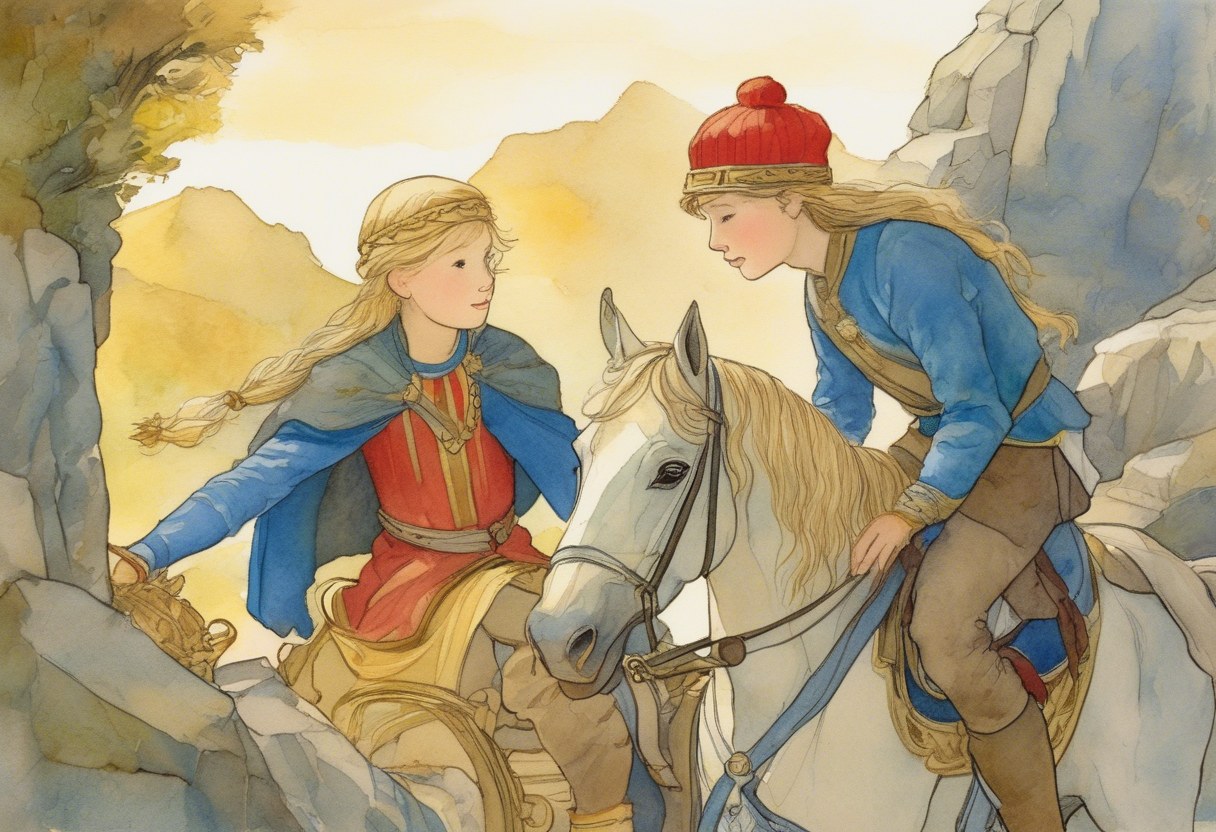
When he arrived, a great crowd stood staring up at the top. Per and Pål were there too, nearly drained of colour because their horses had slipped and tumbled back down. The Ash Lad turned his horse towards the mountain. Its hooves clinked on the glass, it slid one step but took two more, and then they were on their way up. The people gasped. Just before the top he leaned forward, and the princess, who had seen him coming, laid the first golden apple in his hand. Then he turned and rode down again, so fast that no one had time to say a word.
When Per and Pål came home, they both talked at once. "A knight in copper came!" cried Pål. "He rode all the way up and took an apple! Nobody knows who he was."
"He must have been a prince from some faraway land," said Per. The Ash Lad sat in the ashes with an innocent face and asked if they had seen the armour. "Well, yes," answered Per. "But it was far too fine for you to understand."
The next day the same thing happened, except that the Ash Lad now rode the silver horse and wore silver armour. He rode up even more easily, and the princess was waiting with the second apple. He bowed, took it and vanished before anyone could ask a question. Out on the road he almost laughed aloud at his brothers, who were shouting and pointing, but he held it in. He didn't want anyone to guess.
Three golden apples on the table
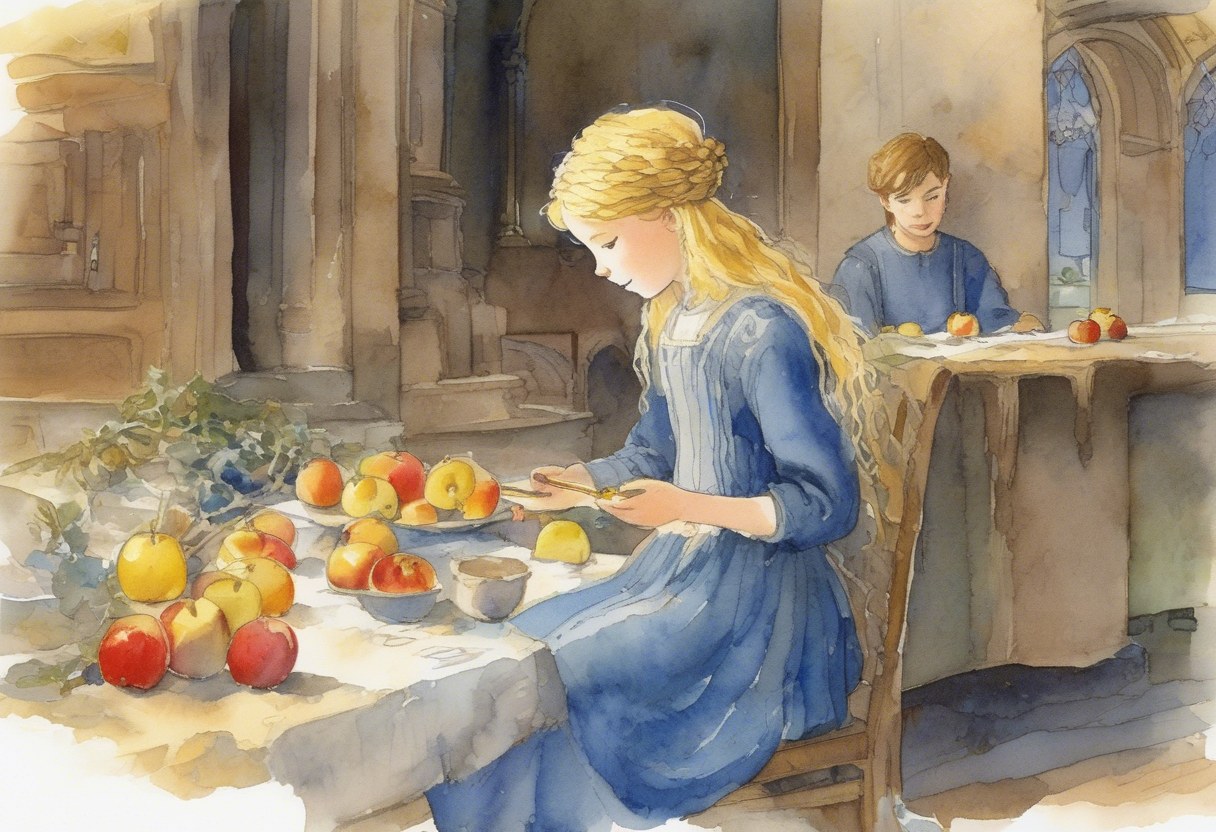
On the third day the Ash Lad rode the biggest horse, in golden armour that flashed so brightly in the sun that everyone had to blink. He climbed the glass mountain like a bird over a fence. The princess smiled when she saw him and held out the last apple. But this time the king's men were prepared. They stood spread out around the foot of the mountain, and when he came down, they tried to stop the horse and keep him from getting away. The Ash Lad held tight to the reins and let the horse take a few wild leaps. Only a small scrap of his cloak was left behind in their hands. Then he was gone into the forest, and no one saw which way he went.
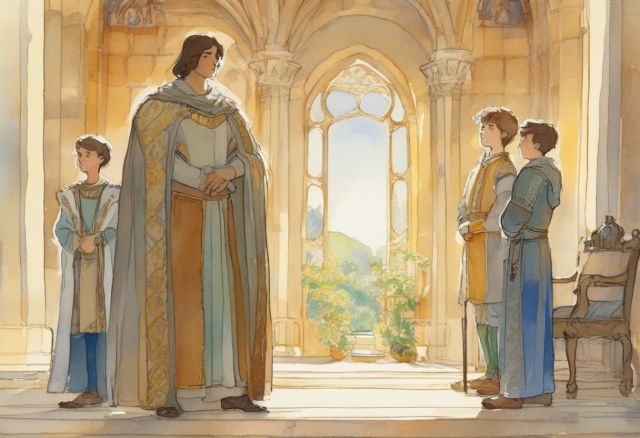
The king was both impressed and puzzled. "I want to meet this knight," he said. "He shall come to my table, and everyone else with him." So he summoned all the men from across the land. Per and Pål set off, and this time the Ash Lad was allowed to go too, only because his father insisted. He wore his shabby clothes and had soot on his cheeks.
In the great hall everyone was asked to show what they had. But nobody had a golden apple. At last it was the Ash Lad's turn. He rummaged in his pockets among the odd stones, the reel of thread and the rusty horseshoe, and took out one golden apple. Then another. Then a third. He laid them neatly on the table and pulled out the little scrap of cloak, which fitted exactly into the tear where the king's men had ripped it.
The hall grew so quiet you could have heard a fly land. Then the princess smiled and rose to her feet. "It's him," she said. "He is the one who never made a fuss about any of it."
Per and Pål stood with their mouths hanging open. But the Ash Lad bore them no grudge. He smiled at them and said, "You shall ride the golden horse one day." Then he was dressed in the finest clothes, and a wedding was held that echoed through every mountain. The Ash Lad and the princess received both half the kingdom and each other. And they lived happily and kindly together for the rest of their days.
Snip, snap, snout, this tale's told out.
Freely retold after Asbjørnsen & Moe: Norske Folkeeventyr (1840-årene).
This tale was written with the help of artificial intelligence (Gemini) and illustrated with Stable Diffusion XL. Every tale is checked for child-friendly content before it appears here.